Among the many breathtaking festivals of Srirangam Ranganathaswamy Temple, the procession of Namperumal on the Hanumantha Vahanam occupies a deeply emotional and theological place in the hearts of Sri Vaishnavas.
In this divine spectacle, the Lord of Srirangam — worshipped as Namperumal, the “Beloved Lord” who mingles with devotees — ascends the majestic form of Hanuman, the eternal servant of Sri Rama.
The symbolism is profound. Here stands the Supreme Lord, who reclines as Ranganatha in yogic majesty within the sanctum, now emerging amidst devotees borne upon the shoulders of His greatest servant — Hanuman, the embodiment of surrender, strength, wisdom, and unwavering bhakti.
The Hanumantha Vahanam is not merely a festival vehicle. It is a moving declaration of the Sri Vaishnava ideal: the Lord delights in the devotion of His bhakta, and the bhakta exists only for the Lord.
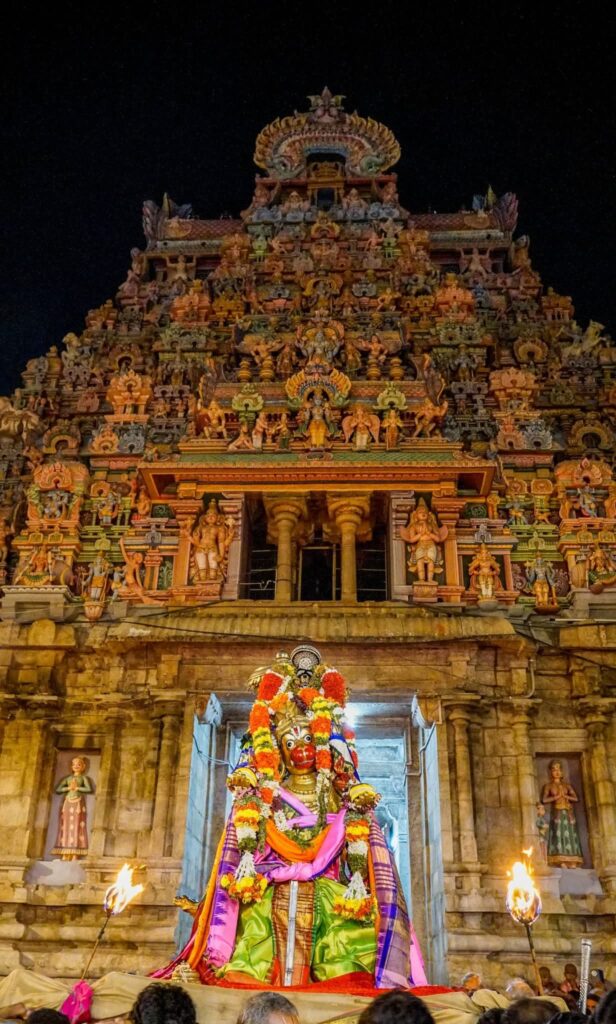
Hanuman in the Sri Vaishnava Tradition
In the Sri Vaishnava sampradaya, Hanuman is revered not only as the heroic servant of Sri Rama, but also as the very personification of kainkaryam — selfless service unto Bhagavan.
The great Acharyas often describe Hanuman as the perfect devotee because:
- His mind never strayed from Rama
- His speech glorified Rama alone
- His body existed solely for Rama’s service
This spirit is beautifully captured in the Ramayana itself:
“dāsō’ham kōsalēndrasya”
“I am the servant of the Lord of Kosala.”
Hanuman’s identity was not power, scholarship, or valor — but servitude to the Lord.
Thus, when Namperumal rides the Hanumantha Vahanam, the message is unmistakable:
the Lord chooses to dwell upon the devotion of His servant.
Namperumal — The Walking Divinity of Srirangam
Unlike many temple deities who remain largely within the sanctum, Namperumal of Srirangam is celebrated for His frequent processions. Sri Vaishnavas lovingly say that Namperumal “comes out seeking His devotees.”
The emotional bond between Namperumal and the people of Srirangam is unique. During festivals, He appears in countless vahanams — Garuda, Yanai, Sesha, Horse, and Hanumantha Vahanam among others — each carrying deep philosophical significance.
The Hanumantha Vahanam especially recalls the Rama avatara. Although Ranganatha reclines in transcendental serenity, the devotees perceive within Him the same Sri Rama who embraced Hanuman with immeasurable grace.
Theological Symbolism of the Hanumantha Vahanam
The Hanumantha Vahanam represents multiple layers of meaning.
1. Bhakta Supporting Bhagavan
At first glance, Hanuman appears to physically carry the Lord. Yet Sri Vaishnava theology reverses the idea beautifully: it is the Lord who sustains all existence, including Hanuman himself.
Still, Bhagavan allows Himself to be “carried” by devotion. This expresses the mysterious tenderness of divine grace — the Infinite becoming accessible through love.
2. Service as the Highest Ideal
Hanuman never sought liberation, kingdom, or recognition. He desired only eternal service.
This ideal is echoed throughout the hymns of the Alwars, who repeatedly pray not for worldly gains but for eternal kainkaryam at the Lord’s feet.
3. Rama Bhakti Within Ranganatha Worship
Srirangam holds a special connection to Sri Rama. Tradition narrates that the Ranganatha deity was worshipped by the Ikshvaku dynasty and eventually gifted by Sri Rama to Vibhishana.
Thus, whenever Namperumal mounts the Hanumantha Vahanam, devotees see not merely Ranganatha, but Rama Himself reunited with His beloved Hanuman.
Alwar Hymns Echoing Hanuman’s Spirit of Devotion
Though the Alwars may not always directly describe the Hanumantha Vahanam procession, many hymns resonate deeply with Hanuman’s spirit of total surrender and service.
Nammalvar — Tiruvaymozhi
Nammalvar repeatedly longs to become anything connected with the Lord’s service:
“adiyārgaḷ kuzhānggaḷai uḍan kūḍuvadu enru kolō?”
“When shall I join the gatherings of His servants?”
This yearning mirrors Hanuman’s eternal desire to remain among the servants of Bhagavan.
Elsewhere, Nammalvar says:
“ozhivil kālamellām uḍanāy manni
vazhuvilā adimai seyya vēṇḍum nām”
“For all time without interruption,
we must remain with Him and perform faultless service.”
This is perhaps the very essence of Hanuman.
Kulasekara Alvar — Perumal Tirumozhi
Kulasekara Alvar’s devotion to Rama is legendary. In one celebrated decad, he becomes emotionally immersed in the Ramayana narrative itself.
He praises those associated with Rama and longs for participation in divine service. The emotional tone resembles Hanuman’s own intense attachment to Rama.
A famous sentiment attributed to the Alvar tradition reflects this mood:
“I desire not heaven, but only service to the Lord.”
Tondaradippodi Alvar and Srirangam
Tondaradippodi Alvar, whose life revolved around Srirangam, glorified Lord Ranganatha with unmatched intimacy.
In the Tirumalai, he declares:
“pacchai mā malai pōl mēni
pavaḷa vāy kamala cenggaṇ”
Describing the breathtaking beauty of Ranganatha, the Alvar reveals the same devotional absorption that Hanuman experienced upon beholding Rama.
The Emotional Experience of the Procession
During the Hanumantha Vahanam procession, the streets of Srirangam transform into a living Vaikuntha. Vedic chants resound, Divya Prabandham hymns fill the air, lamps flicker against the night sky, and devotees behold Namperumal seated majestically upon Hanuman.
The image itself conveys movement, energy, and devotion. Hanuman is sculpted in dynamic posture — alert, powerful, eager for service. Namperumal radiates serene compassion above him.
For devotees, the procession is not theatrical symbolism alone. It becomes an invitation:
- Can we cultivate Hanuman’s humility?
- Can we remember the Lord constantly?
- Can our lives become instruments of divine service?
The Hanumantha Vahanam reminds every Sri Vaishnava that true greatness lies not in authority, but in surrender.
Hanuman as the Eternal Acharya of Service
Sri Vaishnava Acharyas often hold Hanuman as an exemplar of ideal discipleship.
He possessed:
- perfect knowledge,
- immense strength,
- scriptural wisdom,
- fearless courage,
yet considered himself only “Rama’s servant.”
This humility is the cornerstone of Sri Vaishnava philosophy.
When Namperumal rides upon Hanuman, the visual teaching becomes complete:
- Bhagavan shines in supreme glory,
- the devotee rejoices in service,
- and divine love unites them eternally.
Conclusion
The Hanumantha Vahanam of Srirangam is far more than a festival tradition. It is theology in motion, poetry in procession, and devotion made visible.
In Hanuman, devotees witness the highest ideal of surrender.
In Namperumal, they behold the Lord who accepts and cherishes such devotion.
Together, they proclaim the eternal truth celebrated by the Alwars and Acharyas alike:
The soul finds its fulfillment not in possession, power, or pride — but in loving service at the feet of the Lord.
And thus, through the sacred streets of Srirangam, Namperumal continues His timeless journey — carried by Hanuman, carried by devotion, and carried forever in the hearts of His devotees.