“ऋतूनां कुसुमाकरः” (ṛtūnāṁ kusumākaraḥ)
“Among seasons, I am spring.” — Bhagavad Gita 10.35
In the Bhagavad Gita, Lord Krishna identifies Himself with the most beautiful of seasons—spring, the time of blossoms, fragrance, freshness, and renewal. It is perhaps this divine association that gives Vasantha Utsavam its profound spiritual charm in the Vaishnava tradition. Celebrated across many Perumal temples and Divya Desams, this sacred festival is not merely about marking a season; it is about lovingly honouring Bhagavan in a form that reflects nature’s own joy and rejuvenation.
Tirumala and the Grand Tradition of Vasanthotsavam
Among all Vaishnava temples, Tirumala Sri Venkateswara Temple is one of the most renowned for its grand observance of Vasanthotsavam. The festival here enjoys strong historical significance, with records attributing its formal royal patronage to King Achyuta Deva Raya of the Vijayanagara Empire in the 16th century.
At Tirumala, Vasanthotsavam is traditionally celebrated as a three-day festival, during which the utsava murtis of the Lord are brought out for special worship. The spiritual idea behind the celebration is deeply devotional: just as one would care for a beloved king during the heat of summer, devotees offer cooling comfort to the Lord through fragrant rituals, sacred bathing, and ceremonial worship.
Though Tirumala’s observance is especially well documented, the spirit of this festival belongs to a much older Agamic temple tradition, where Bhagavan is worshipped not as an abstract deity, but as a living divine presence deserving loving service.
What Happens During Vasantha Utsavam?
Vasantha Utsavam is one of the most visually enchanting temple festivals in the Vaishnava calendar. The rituals vary from temple to temple, but the devotional essence remains the same.
The utsava murti is ceremonially brought to a specially decorated Vasantha Mandapam, often adorned with flowers, fragrant leaves, sandalwood arrangements, and cooling decorative elements that reflect the freshness of spring.
One of the central rituals is Snapana Tirumanjanam, the sacred ceremonial bathing of the deity using auspicious substances such as milk, curd, honey, sandal paste, turmeric, rose water, perfumed water, and herbal ingredients. The atmosphere becomes richly devotional with Vedic chanting, Divya Prabandham recitation, devotional music, and satrumurai offerings.
In some temples, Ankurarpanam, the ritual sowing of sacred seeds, marks the beginning of the festivities, symbolising fertility, auspicious beginnings, and renewal of life itself.
The entire festival is a beautiful act of kainkaryam—loving service to Bhagavan.
Temples Where Vasantha Utsavam is Celebrated
Beyond Tirumala, Vasantha Utsavam is celebrated in many important Perumal temples and Divya Desams, though each temple follows its own traditional customs and schedule. Notable temples include Sri Ranganathaswamy Temple, Srirangam; Sri Varadaraja Perumal Temple, Kanchipuram; Sri Parthasarathy Temple, Triplicane; Oppiliappan Temple; Nachiyar Koil; Sri Sarangapani Temple, Kumbakonam; Thiruvellarai; Thiruvahindrapuram Devanatha Perumal Temple; Vanamamalai; Melkote Cheluvanarayana Swamy Temple; and several other Sri Vaishnava temples across Tamil Nadu and beyond.
While not all 108 Divya Desams celebrate the festival in exactly the same way, the concept of seasonal rejuvenation and ceremonial worship of the Lord during spring remains deeply rooted in Sri Vaishnava temple culture.
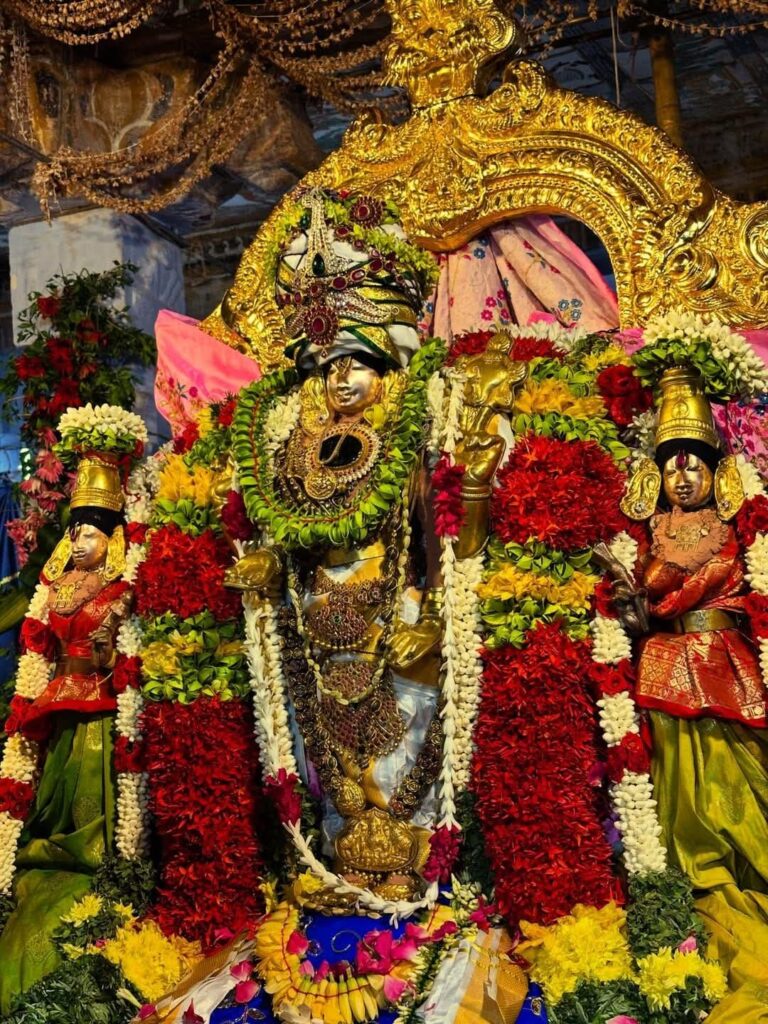
Image: Thirumaliruncholai Kallazhagar Vasantotsavam Day 4 Picture
Why is Vasantha Utsavam Important for Devotees?
The beauty of Vasantha Utsavam lies not merely in its rituals, but in its emotional and spiritual intimacy.
This festival reminds devotees that bhakti is not distant worship—it is affectionate care. In temple tradition, Bhagavan is lovingly treated as one’s divine king, beloved Lord, and eternal refuge. Offering cooling sandal paste, fragrant waters, flowers, and sacred worship becomes an expression of devotion that is both tender and profound.
Spiritually, spring symbolises renewal. Just as nature blossoms after a period of transition, devotees too are reminded that the heart can bloom again after fatigue, sorrow, or spiritual dryness.
Vasantha Utsavam becomes a celebration of inner refreshment.
For many devotees, witnessing the Lord in this beautifully adorned, refreshed, and lovingly worshipped form creates a deep sense of peace and emotional connection. The festival gently teaches that just as devotees seek comfort from Bhagavan, they too may lovingly offer comfort in return through devotion.
In that sense, Vasantha Utsavam is not simply a temple festival.
It is a celebration of reciprocal love between the devotee and the Divine.